All in a night…
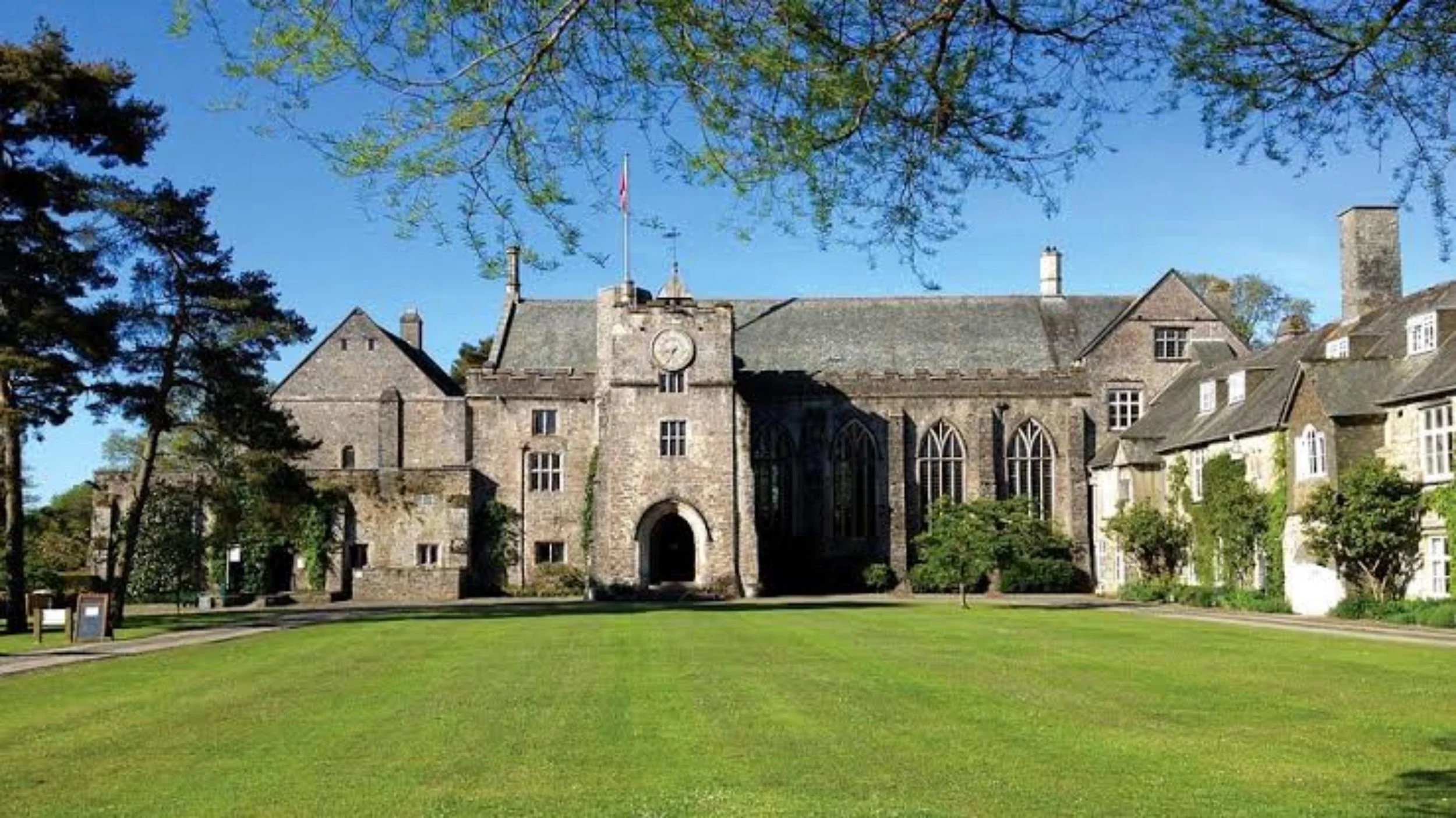
Dartington Hall
People often ask me what it was like to plan and implement nine World Wilderness Congresses over 40 years, how was it done, and so on. Here is one night in that long story: not exactly typical, but not altogether uncommon in the scheme of four decades in eight countries when you are on a global mission to protect wilderness and promote‘wildness’.
1982...we were planning the 3rd World Wilderness Congress in Scotland (1983, Inverness and the Findhorn Foundation). Ian Player (founder of the World Wilderness Congress concept) came to UK from South Africa to join Laurens van der Post (a close friend of and collaborator with Ian) and me for lecture and awareness-raising events in England.
Tom Welch was a friend and colleague -- also a Findhorn Foundation Trustee and retired Commander in the British Army – and he suggested that Laurens present a lecture at the Dartington Trust, near his farm in SW England. The Dartington Trust was (and remains) a well-respected charitable organization dedicated to new ideas, alternative education, and environmental sustainability (a newly emerging topic at that time).
We took the train from London to Totnes, Devon, where Tom met us. Our hosts at the nearby Dartington Trust put us up in the old main house, Dartington Hall, a fabulous Late Medieval-Tudor style mansion considered one of the finest surviving examples of 14th century domestic architecture.
That evening, as I walked upstairs to the bedrooms, I stopped on the landing of the grand main staircase and looked up at the large portrait of Lady Elizabeth Plantagenet (Elizabeth of Lancaster). She had assumed control of Dartington Estate after her 2nd husband, John Holland, Duke of Exeter, was executed in 1400 for treason, because of his role in the failed Epiphany Rising that sought to overthrow King Henry IV. The painting, depicting her with a stern but not unkind visage, was in the style where the eyes seem to follow the viewer (the ‘Mona Lisa effect’).
That night I awoke at about 3am with the sense that someone had entered the room. I looked around and there she was, the Lady herself in her black velvet and silk gown, gazing around the room. Our eyes met briefly, then she simply disappeared, leaving an electric but interestingly calm atmosphere. Though I’d had previous experiences such as this they were not an everyday occurrence, and it left me thoughtful and unable to sleep. I decided to go down to the kitchen to make tea.
The kitchen light was on and, as I opened the door, I saw Laurens sitting at the table reading a small book. He looked up, removing a monocle from his right eye, and simply said, "Oh Vance, please join me for a cup of tea," as if a 330/4am visit in the kitchen was normal procedure. I asked what he was reading and he showed me the cover of a worn, tattered little paperback copy of The Frogs, a famous Greek tragedy created by Aristophanes in 450 BCE.
For an hour or more I received a quiet but spirited talk from Laurens -- with knowledge, perspective, insight, and a bit of humor -- about the play and its symbolism. In summary, Dionysus (the God of Theater) travels to the Underworld to resurrect a poet to return to save Athens from its moral decay. Symbolizing the debate over the role of art in society – if theater should teach civic virtue and moral strength or spark intellectual debate and question authority -- Dionysus ultimately chooses Aeschylus (a classic moralist) to return to save Athens, rather than Euripides (the modern innovator). I was fascinated – and it all seemed completely normal and perfect for the setting of Dartington Hall at 4am.
A couple of hours later, over breakfast, I mentioned to the housekeeper about a 'presence' in the house during the night. She said, "Oh, did The Lady visit you? She is always concerned about the well-being of her guests."
Thus, the next day started…
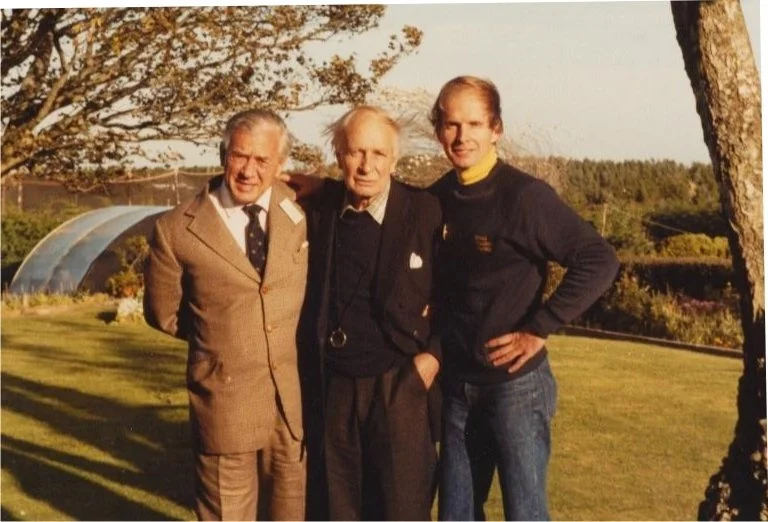
Ian Player (L) Laurens van der Post (C) Vance Martin (R), 1983, Findhorn Foundation
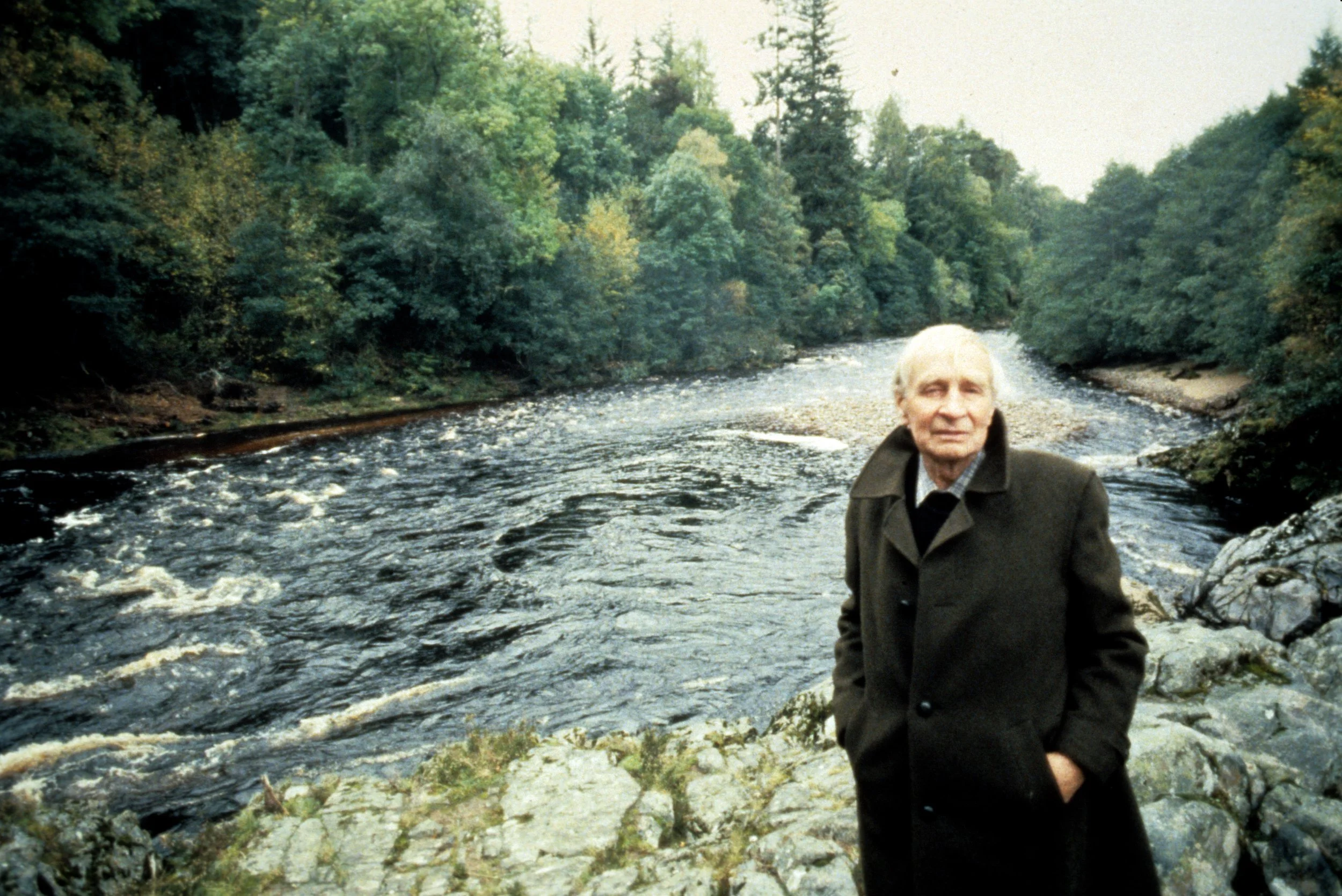
Laurens explores the Findhorn River at Randolph’s Leap