Kathleen Ryan: Out of IP Law, Into Natural Law
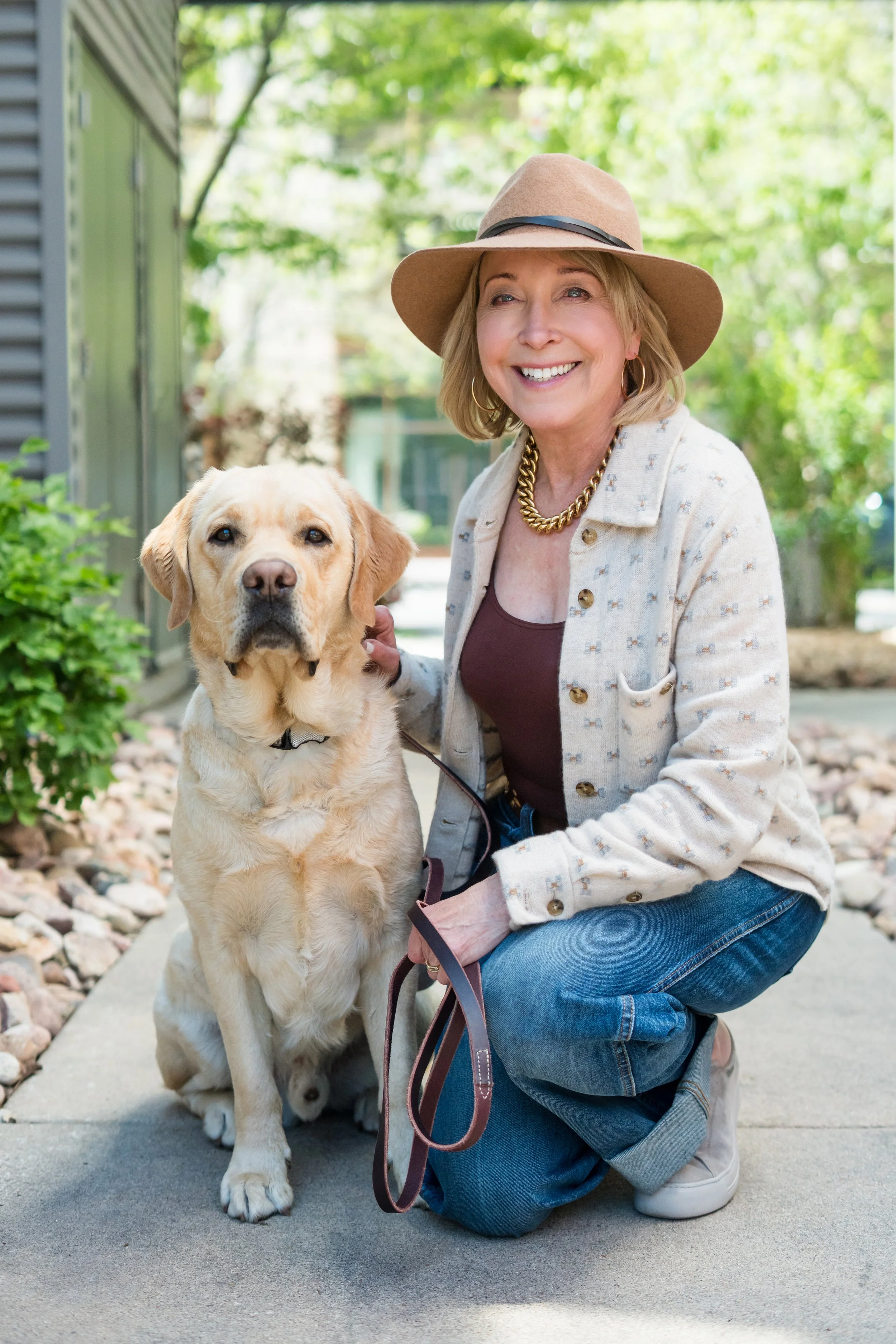
Katleen Ryan and her dog
I was in the ecology club in the 1970s, planting trees and working in our town’s early recycling efforts in high school. In retrospect, moving into natural law isn't so much of a late-in-life conversion – it’s a gradual return to something that’s always been part of me. It just took me some time — college, sidetracks, kids, businesses, years practicing corporate and IP law — to come back around to what interested me from the beginning.The long way around included a degree in piano performance – something I still love – owning a hydroponic vegetable operation in Louisiana, law school, family, and career in intellectual property law. Most, if not all of these, were paths that I hadn’t planned on. But in retrospect, the twists and turns were not really detours. They were like the long prologue of a good book – and preparation for the work ahead.Always interested in all causes for helping animals and the environment, I had the good fortune to meet Vance Martin at WILD, to attend ALDF webinars and generally show up where I thought I could help. Through our local Wild Animal Sanctuary, I heard about an obese Asiatic bear, Dillan, living at a shooting club in rural Pennsylvania. I’m a pest of roadside zoos – armed with my ALDF checklist and camera. In the fall of 2019, while visiting my family in Pittsburgh, I showed up at the rural gun club in central PA— wearing my dad's old L.L. Bean flannel shirt, cap, and puffy vest, trying to blend in. I saw Dillan up close: obese, living in a cramped concrete cage next to the gun range, rocking back and forth with the signature neurotic behavior of a severely distressed animal. Armed with my video, I marched back home and called the local ALDF office – informing them that I'm licensed to practice law in Pennsylvania and will be happy to file a lawsuit. Not so fast, they told me - Dillan wasn't on the endangered species list so no chance for legal action. The law, as written, offered him nothing. Luckily, PETA's campaign, which included two letters from Alec Baldwin to the governor, ultimately got Dillan rescued and transferred to the Wild Animal Sanctuary in Colorado, where he now swims, sunbathes, and hibernates for the first time in a decade.Happy ending for Dillan, but a drop in the bucket- or the ocean if you consider animals in industrial agriculture- for what is needed and, importantly, a lesson for me that animal law can be complicated: leaving huge gaps in the protection all animals need- even being excluded by a technicality like not matching the correct category for protection, a technicality that I didn’t even know about. I thought “how can I learn the most the fastest?” The answer – go to school. Having already earned my J.D., I was eligible for an LLM. So, I had the idea to get an LLM in International Animal Law. I actually had to Google this because I wasn’t sure such a program existed. To my surprise – it did – Yale, Harvard and other schools had valid programs. In the end, I chose Lewis & Clark Law School LLM – where I learned a lot very fast. Since earning my LLM, I have continued down the path. At first, I blended my IP law with efforts to reduce use of animals in our food system. Nearly every class in my LLM program highlighted the horrors of industrialized animal agriculture which harms the environment, local communities and the lives of billions of animals every year. I've spoken at conferences, like Future of Protein Production, from an IP branding perspective about US and international restrictive labeling laws for alternative protein products. For now, I've decided that the emerging plant based and even cultivated meat companies can tackle these issues handily with the resources and momentum they’ve built. And, as the world careens into climate crisis and conflict, I’ve begun to focus on environmental harms that ultimately greatly impact the lives of animals. I'm now focused on issues like ecocide — the large-scale destruction of ecosystems — and the legal frameworks being built around the world to treat nature not as property, but as something worth protecting in its own right. I’m keenly interested in organizations – domestic and international – that are fighting to prevent destruction of ecosystems. Domestic organizations such as Earthjustice which take on polluters and bad actors on behalf of wildlands, clean air, and endangered species – show what’s legally possible. Whether it rises to the formal legal definition of ecocide being debated internationally or not, the effect on ecosystems is the same. I've started pulling together research on my website (an early work-in-progress) at positive-change.world, mostly to educate myself, and to connect with others who are asking the same questions and working to implement laws at the international level to tackle these daunting, but hopefully solvable issues. I took the long way around. But I'm exactly where I was always headed.