Jayme Dittmar: The Dog Man
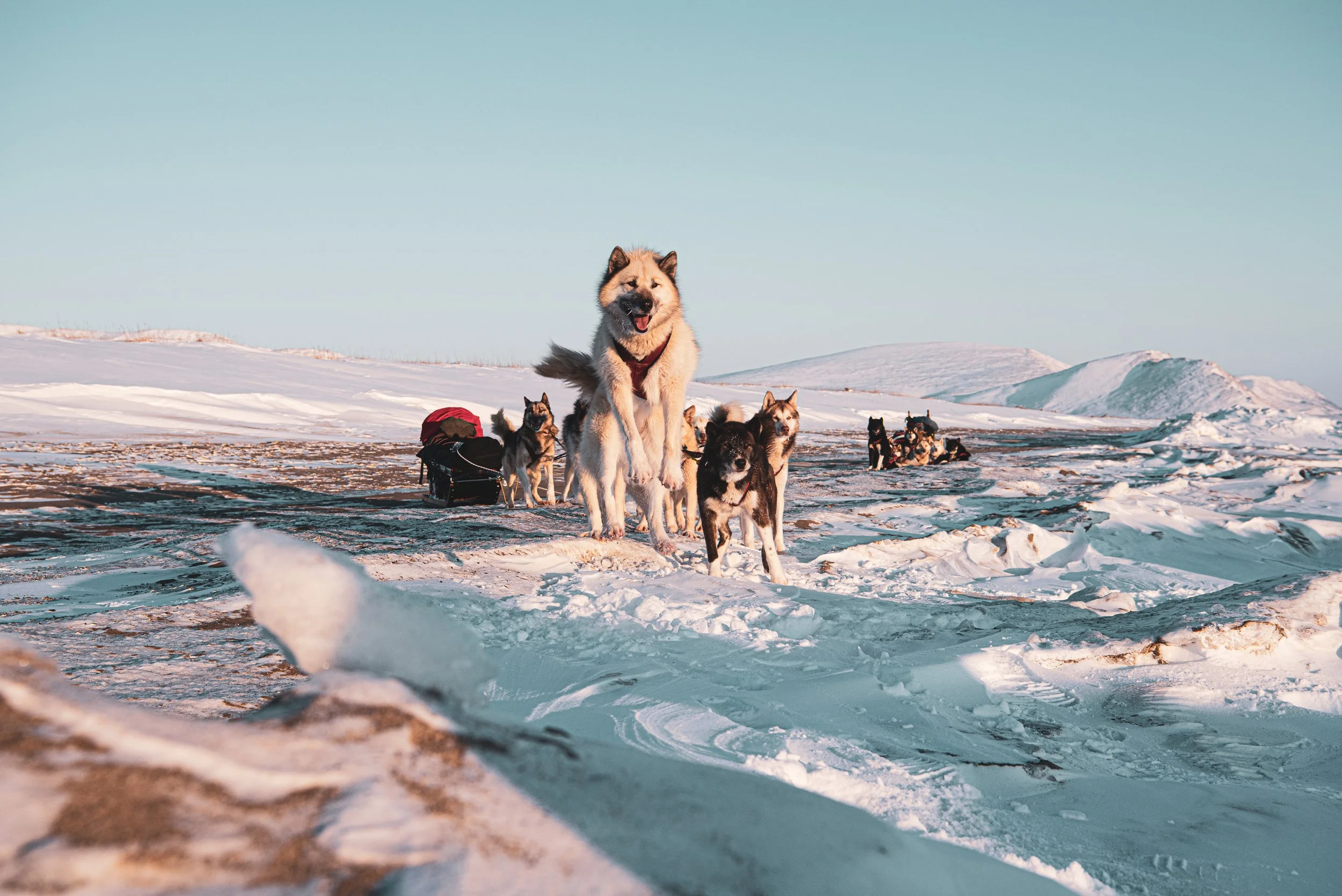
Pixie, lead dog, airborne, jumped into harness constantly to show her enthusiasm for moving forward.
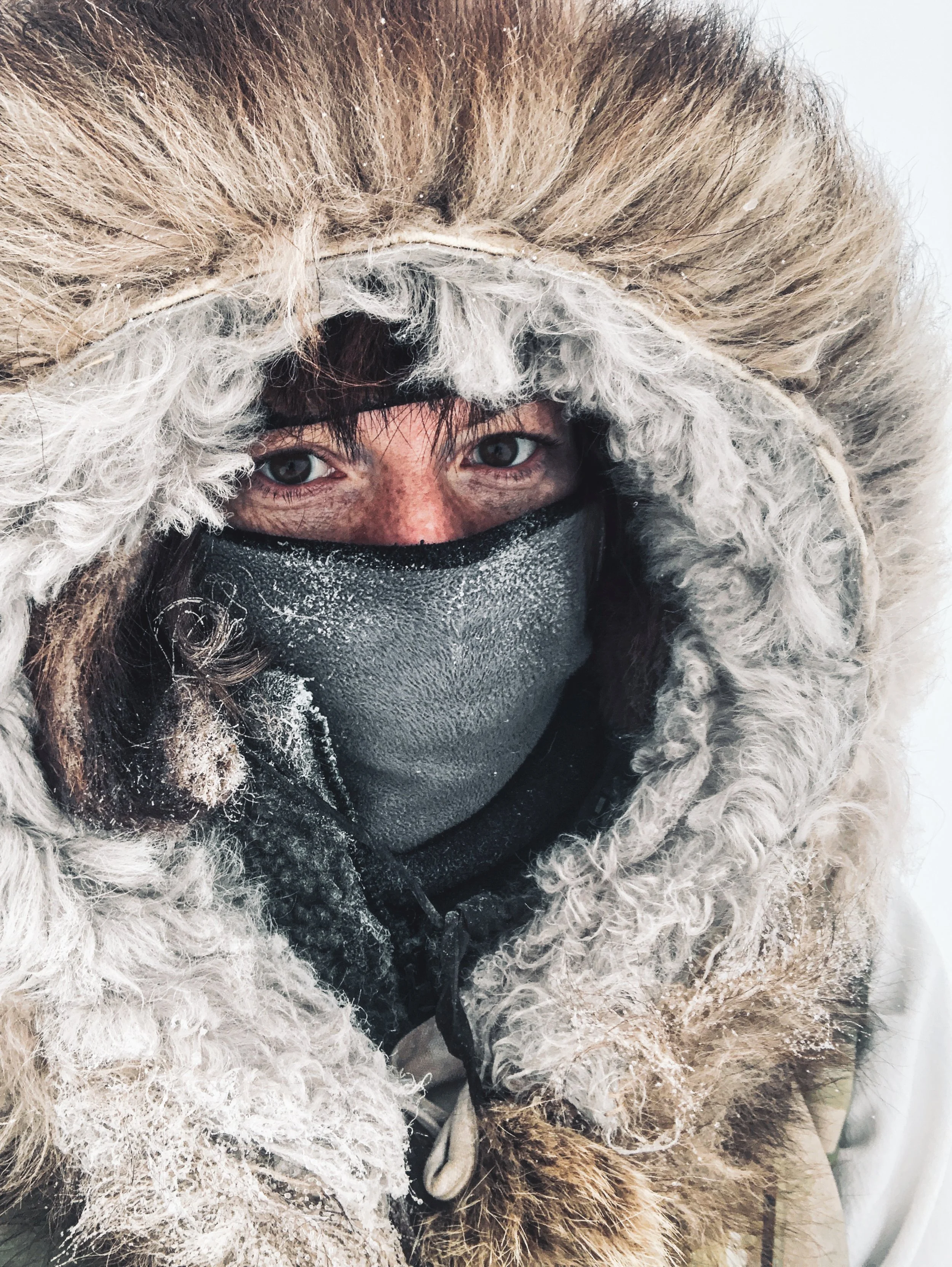
We had finally arrived to the village of Teller, Alaska by dog team. Even though our huskies were tired, they lunged into their harnesses and barked with anticipation. We’d been on the trail for five days dog mushing from Nome. It should have taken us three, but the travel was slow. There was hardly any snow for the overland route, so we wound our way along the coast snaking through the large pieces of aufeis. We were there as a stopover, traveling up the coast, and I specifically wanted to find a Dog Man by the name of Joe Garnier while we were here. He is one of the legends of the dog mushing world.I allowed my dogs to decide the route through the village, and they crested a small hill arriving at a few cabins, a traditional wood sauna and a dog yard with 12 barking sled dogs welcoming us. Joe was standing in front of his dog yard. He wore his wolf and wolverine ruff masking his face from the wind. I pulled my dogs up next to him and set the brake. At the time Joe didn’t know my name. I never told him when we were leaving or what our travel plan had been. As I was pulling off my own ruff to introduce myself he said, “You’re three days late. Better park your dogs. There’s a storm coming.” And he turned away to go inside. I looked up. There wasn’t a cloud in the sky.This is the typical shit you hear from a Dog Man. You never know if they are being serious or not.Dog men always seem to have one eye on the horizon, one on their team, and a combined gaze that is distant, but warm. They rarely reveal their secrets and you need to spend long periods of time with them to come to know what they know and understand how they have learned it. They are the culture bearers, and the ones who hold the knowledge necessary to disappear into the country, but also the bond needed with their dogs to travel long distances without a trail - a skillset that is disappearing, as quick as the permafrost is thawing, and the salmon are disappearing in the North.Overall, it seems the Arctic’s largest contributing factor to dog mushing decline is climate change. Reduced snow cover, thinning sea and glacier ice, as well as extreme and unpredictable weather events have melted away traditional hunting and traveling routes. On one winter expedition, attempting to sled from Greenland to Canada, we were 500 miles from the North Pole and couldn’t find enough steadfast ice to attempt a crossing.Many regions have successfully transitioned their sled dog operations into tourist attractions, offering visitors the opportunity to experience dog sledding and learn about the culture firsthand to offset economic costs and environmental challenge of raising dogs. It reminds us all that adaptability stands as the linchpin in preserving the cherished legacy of dog mushing culture, bridging the gap between the past and the future. An enduring strength lies within the heart of the dog mushers dedicated enough to continue forward without a known fate, or coordinates ahead. A type of blind faith is something dog mushers have also held for hundreds of years.The storm that Joe Garnier alluded to lasted a week. As the winds raged outside, he shared his food, sauna, home, stories and laughter with us. We learned how to find fresh water miles out on the sea ice so the dogs wouldn’t become dehydrated. He taught us about the best parts of a seal to feed to the dogs, the winds that indicated immediate danger, and those that signaled smaller storms that could be traveled through, and so much more.A week later the skies cleared. When it was time to leave, he broke trail for us a few miles, leading us out of the village and into the mountains. “I’d go with you, but my body is older, and my back hurts,” he said. Reluctantly he gave a smile, a nod and turned back to the village.“Oh, hey Dittmar. The stuff you see out there on the trail going north - it’s going to be better than any acid trip you’ve ever been on.” The shit Dog Men say… he wasn’t wrong.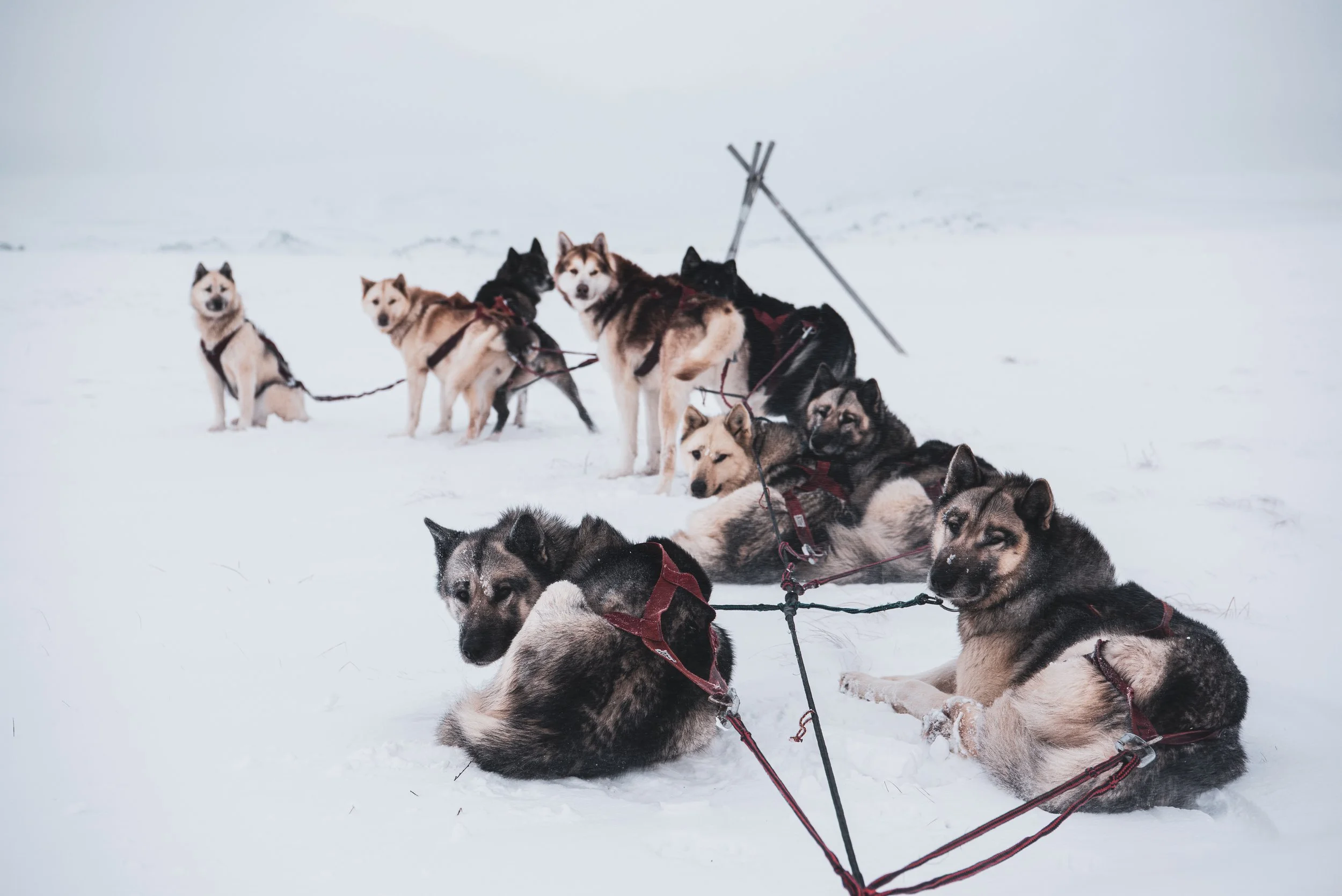
The team takes a break on the summit of a ridge.
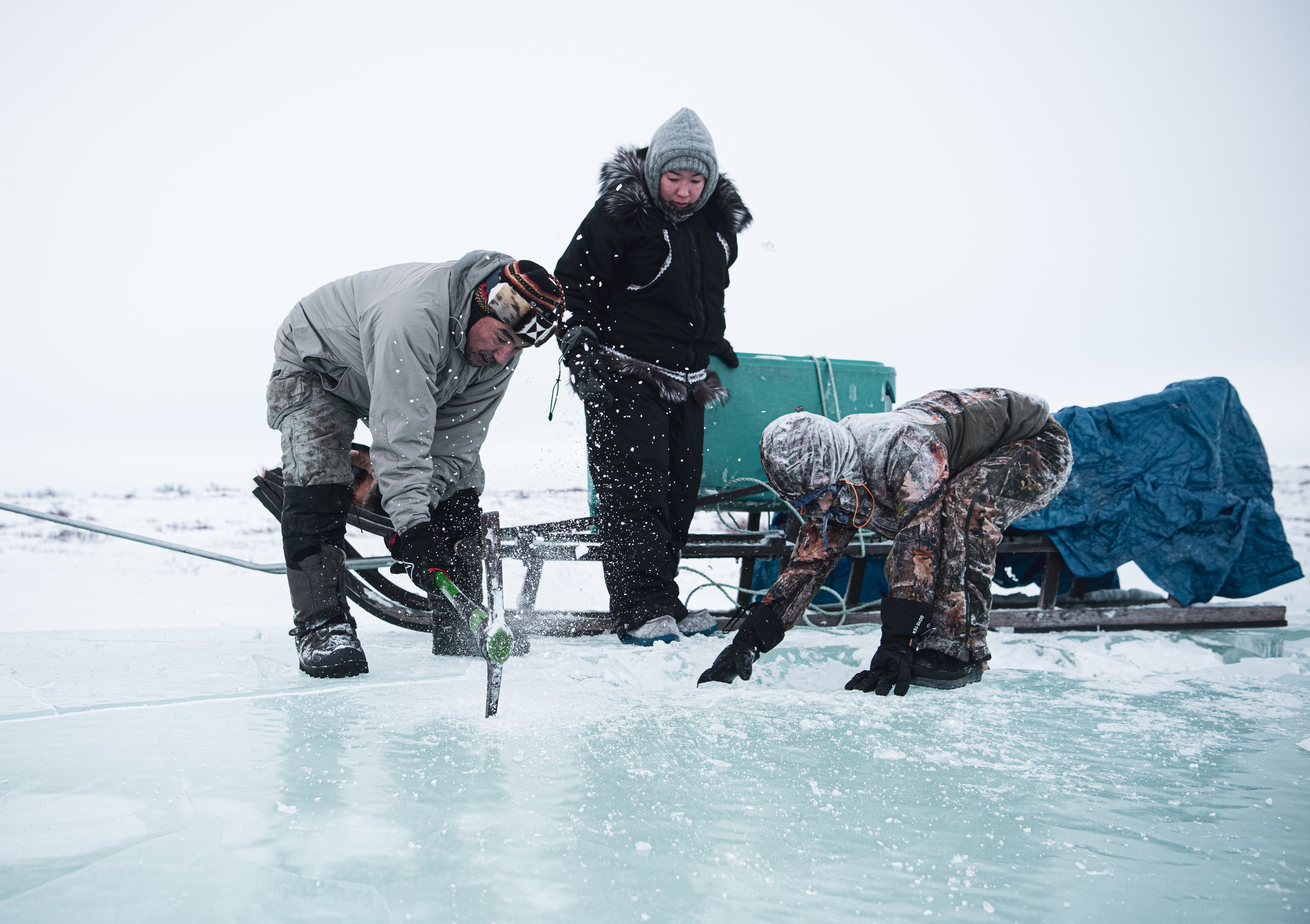
Joe Garnier and his daughters collects water by chipping ice out of freshwater pools near to his village.
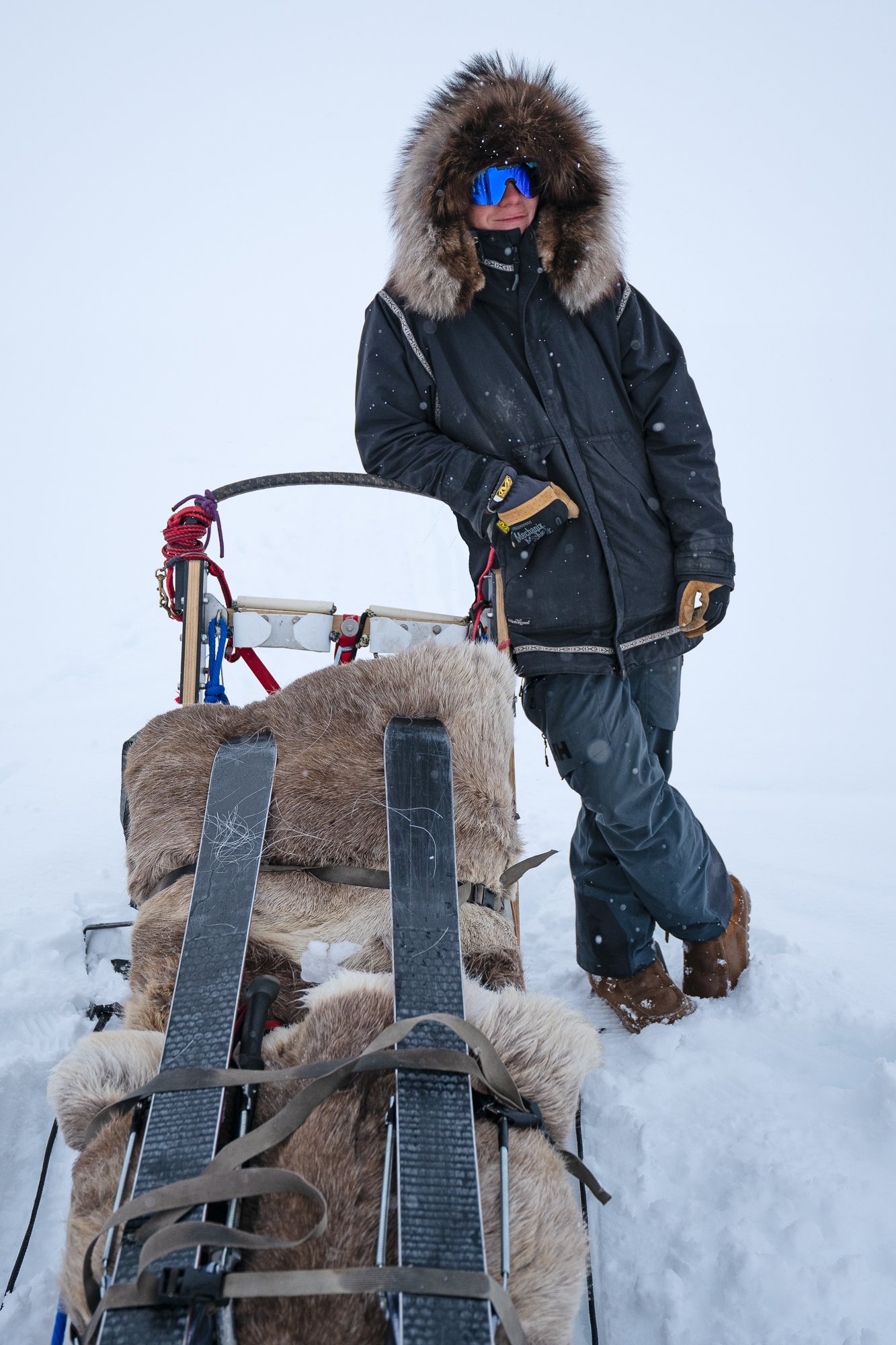
Jayme Dittmar
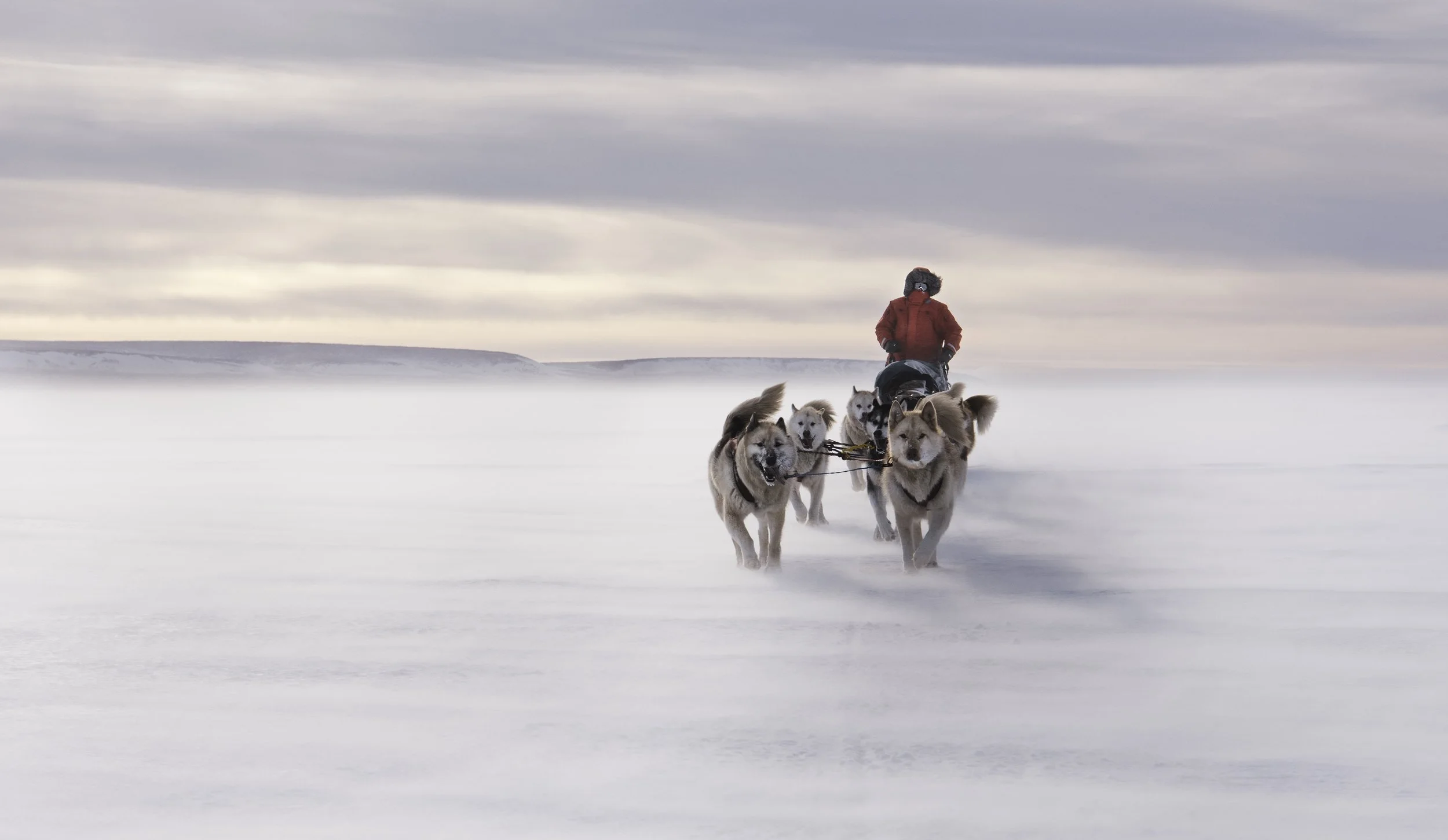
We often had to run through ground blizzards on the sea ice. It can get very disorienting not being able to see your feet.